
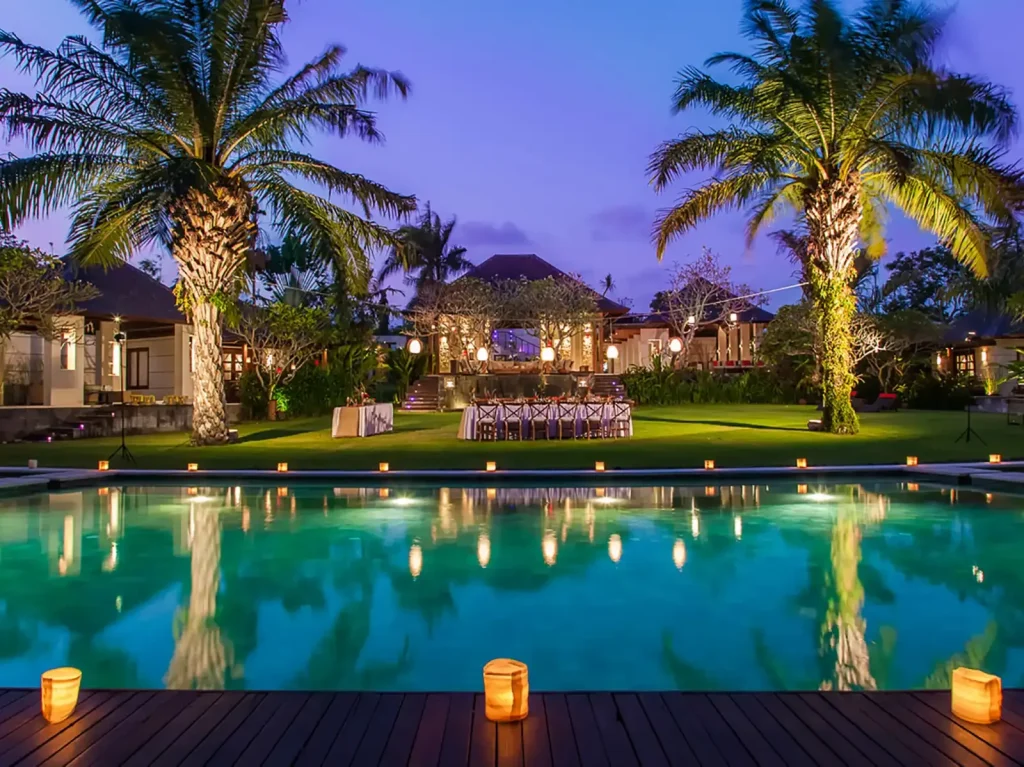
- Accommodation: Private villas with dedicated staff often constitute 40-50% of the total cost.
- Inclusions: Daily one-on-one therapy, bespoke wellness treatments, and gourmet nutrition plans are standard.
- Exclusions: International airfare, travel insurance, and optional high-end excursions can add $2,000 to $10,000.
The air, thick with the scent of frangipani and smoldering incense, is the first thing you notice. It’s a world away from the recycled chill of a corporate boardroom. Here, the dominant sound is not the ping of an incoming email, but the gentle percussion of a distant gamelan orchestra and the rustle of palm fronds along the Ayung River gorge. You are not looking at a screen saver; you are standing in the antidote to the very life that necessitates it. This is the entry point to a Balinese burnout retreat, a meticulously engineered sanctuary designed to deconstruct the architecture of modern exhaustion. But delivering this level of restorative alchemy comes with a significant price tag. Understanding that cost requires looking beyond the brochure and into the very philosophy of Balinese luxury.
Deconstructing the Price Tag: What Are You Actually Paying For?
When you see a figure approaching five digits for a week-long stay, it’s easy to focus on the tangible. Yes, a significant portion of the cost—often up to 50%—is allocated to your private sanctuary. We are not talking about a hotel room. We are talking about an entire, self-contained estate villa, perhaps 3,000 square feet with its own infinity pool, indoor-outdoor living spaces, and a dedicated butler on call 24/7. At a property like the Four Seasons Sayan, where a one-bedroom villa can command over $1,500 per night before any programming is added, the baseline cost quickly accumulates. But the physical space is merely the stage. The real investment is in the human capital and the radical level of personalization. A premier retreat maintains a staff-to-guest ratio of at least 3:1, and often higher. This team is not just housekeeping and service staff; it is a curated roster of specialists. Your therapist may hold a Ph.D. from Stanford, your nutritionist might be a published author on metabolic health, and your meditation guide could be a Balinese high priest, or pemangku. This is the core of the value proposition: you are paying for exclusive access to elite minds whose sole focus, for 168 hours, is your complete recalibration.
The Tiers of Luxury: From Premier to Ultra-Exclusive
Not all luxury retreats are created equal. The $7,000 to $15,000 range represents a spectrum of intensity and exclusivity. At the lower end, from $7,000 to $9,000, you will find exceptional programs often integrated within larger five-star resorts. These might involve small group sessions (perhaps 4-6 participants) for activities like yoga or workshops, offering a sense of community. The accommodation will be a top-tier suite or a junior villa. The wellness programming is excellent, but may follow a more structured, less bespoke schedule. You might receive 10-12 hours of one-on-one sessions during a 7-day stay. This is a powerful and effective model for many. However, for the C-suite executive, founder, or professional facing profound burnout, the next tier is where true transformation occurs. From $10,000 upwards, you enter the realm of the ultra-exclusive, fully private experience. This is the domain of specialists like the programs offered by Bali Burnout Retreats for Executives & Professionals. Here, the concept of a “group” is eliminated entirely. The program is built from the ground up around a single client. Your schedule, your meals, your therapeutic modalities—every single element is a direct response to your intake assessments and evolving needs. This tier guarantees absolute privacy and a level of focused, expert attention that is simply not possible in any other format.
Accommodation: The Foundation of Your Sanctuary
In Bali, your living space is an active participant in your healing, not just a place to sleep. The island’s design philosophy is deeply rooted in principles like Tri Hita Karana, a concept that emphasizes harmony between humans, the divine, and the environment. As the official Indonesian tourism board notes, this philosophy dictates the spatial orientation and flow of traditional architecture. Luxury villas on the island are modern interpretations of this principle. The cost is a direct reflection of securing a location that embodies this. A villa perched on the Sayan Ridge, with its uninterrupted views of virgin jungle, offers a profound sense of perspective. An estate on the limestone cliffs of Uluwatu, with the Indian Ocean crashing 200 feet below, provides a powerful connection to nature’s raw energy. These prime locations are finite and command a premium. The construction itself involves materials like reclaimed teak, volcanic stone, and hand-thatched alang-alang roofing, all requiring skilled local artisans. A private villa in a program like the ones offered by Bali Burnout Retreats is more than just a room; it’s a meticulously crafted environment designed to minimize external stimuli and maximize introspection and peace, a critical factor when unwinding years of accumulated stress.
The “Soft” Costs: Expertise, Access, and Transformation
The most significant value in a high-end retreat lies in its intangible assets. You are investing in the accumulated wisdom and expertise of your practitioners. The difference between a standard spa therapist and a master healer who has undergone decades of training is immense. Consider the cost of a top-tier executive coach in New York or London, which can easily exceed $800 per hour. A 10-day private retreat will include 20-30 hours of direct, one-on-one time with professionals of this caliber, effectively creating a hyper-condensed therapeutic and strategic intervention. Furthermore, these retreats provide access that money alone often cannot buy. This might be a private water purification ceremony at Tirta Empul, a 10th-century temple, long after the tourist crowds have departed. It could be a personal audience with a respected local artist in their private compound in Mas village. This curated access is part of a holistic approach that recognizes that healing comes not just from therapy, but from re-engaging with culture, beauty, and heritage. It’s about connecting with something larger than oneself, a feeling amplified by the island’s unique cultural landscape, part of which is protected as a UNESCO World Heritage site for its ancient subak irrigation system.
Quick FAQ on Bali Retreat Costs
Is a $12,000 retreat really worth the investment?
When viewed as a preventative measure or a critical intervention, the value becomes clear. Consider the cost of executive burnout: lost productivity, strained professional relationships, potential health crises, or even a failed enterprise. The ROI on a program that restores focus, resilience, and well-being can be exponential. It is an investment in your most valuable asset: yourself.
Can I find a “luxury” retreat for under $5,000?
The term “luxury” is subjective. While many excellent wellness holidays exist in the sub-$5,000 range, they typically make compromises on the core tenets of a true burnout retreat. You will likely be in a group setting, the level of practitioner expertise may be lower, and the accommodation, while pleasant, will not offer the absolute privacy of a dedicated villa. They are restorative, but not the surgical intervention a high-end program provides.
What is typically not included in the all-inclusive price?
The standard exclusions are your international flights, comprehensive travel and medical insurance (which is non-negotiable), any required visa fees, and discretionary personal spending. While all meals are included, premium alcoholic beverages are usually an additional charge. Off-site activities not part of your official itinerary would also be extra.
How far in advance should I book a private retreat?
For the most exclusive and personalized Bali burnout retreats for professionals, booking 6 to 9 months in advance is highly recommended, especially if you plan to travel during the peak or shoulder seasons. This lead time is crucial for securing the best private villas and coordinating the schedules of the most in-demand, top-tier practitioners on the island.
Ultimately, the price of a luxury burnout retreat in Bali is a reflection of its purpose: to provide an uncompromised, deeply personalized, and effective solution to a complex modern problem. It is a strategic investment in longevity, clarity, and performance. The true cost of burnout—in compromised health, fractured relationships, and diminished potential—is incalculably higher than any figure on an invoice. When you are ready to move beyond temporary fixes and invest in a foundational recovery, the specialists at Bali Burnout Retreats are prepared to design your personal sanctuary. Explore their tailored programs for executives and professionals to understand what a truly bespoke healing journey entails.